
Compare bookmakers
Check public register entries by jurisdiction, compare the same market and see which payment details are documented.
Compare four operators →Compare bookmakers, make sense of decimal odds, and learn what to check when a naira transfer or mobile app goes wrong.
Examples in NGN · No predictions · Read guides for Pidgin

Check public register entries by jurisdiction, compare the same market and see which payment details are documented.
Compare four operators →
Understand the bet slip, compare decimal odds and calculate potential returns without using a real stake.
Open the beginner guides →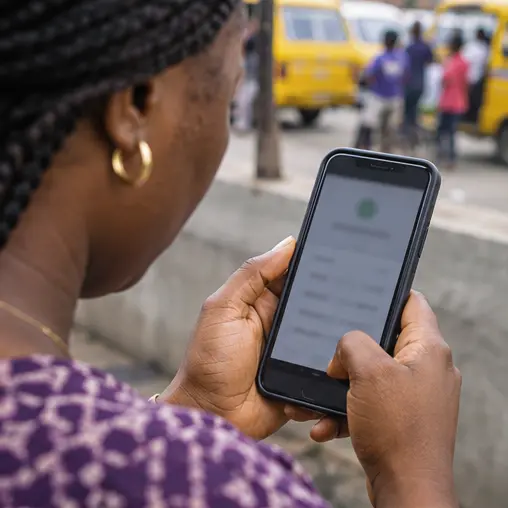
Verify a temporary account, trace a missing deposit or check a mobile app’s publisher before installing it.
Find payment and app help →Convert decimal odds to fractional odds and back with a simple browser calculator.
Open calculator →Estimate gross payout and net result for a single stake using decimal odds.
Open calculator →Multiply decimal prices to estimate combined odds, gross return and net result for an accumulator.
Open calculator →Convert decimal odds into the break-even probability implied by that price.
Open calculator →A debit in your bank history and a credit in the betting cashier are two separate records. Save the references from both systems before reporting a missing balance.
Trace a pending deposit →Set a limit before using a betting account. If you feel pressure to stake more to recover a loss, pause and use the available account controls.
Responsible gambling →A betting account puts three different decisions on the same screen. One is whether you understand the event and market. Another is whether the company and account are appropriate for your location. A third is whether you can trace any money that moves. Handle them separately. A clear bank receipt cannot settle a football bet, and a correctly settled slip cannot explain why a deposit has not reached the cashier. Treat the guides below as reference material you can use without opening an account.
If you have never read a slip, open the beginner guide first and copy an example onto paper. Write down the selection, the period of play, the price and the stake. Check that you can say in one sentence what must happen for the bet to win. If you already have a payment issue, start with the bank and cashier histories instead. You will get more useful information from an order reference than from a new signup or a second transfer.
Use the comparison section when you know which specific questions you want to ask an operator. Examples include whether a market settles at 90 minutes, where you can read a void rule, how an existing customer can verify a withdrawal destination, or how a payment dispute can be escalated. Save the date of any answer you rely on. A commercial landing page can change more quickly than a saved screenshot, and different customers may see different account options.
Before comparing operators, identify the jurisdiction relevant to you. Open the official register for that location and record the trading name, operating company, category and dates as they are shown. Similar brand names can appear in more than one country. A single register entry tells you about the entity and category covered by that register. It cannot answer for every Nigerian state or for an unrelated company that happens to use the same logo.
Look at the source as well as the result. A list may show a historical entry with an end date already in the past. Save the row and ask the responsible authority for an updated record if the current status is unclear. Do not infer a renewal from a later date in another jurisdiction, or infer a loss of authorisation merely because a public list has not been updated. If a link takes you to a different domain, read the legal details there and match them to what you checked before sharing information.
Keep a short comparison note: the authority, the exact entity, the listed activity, the date you checked and anything you could not verify. Write “not established from this source” where appropriate. That is more informative than a check mark which hides the scope of the evidence. If a reviewer quotes an impressive payment speed or minimum deposit, ask whether that figure is for the same country, account type and payment route you intend to use.
Consider two fictional screens for the same match. The first shows Home to win in the full-time 1X2 market at 2.10. The second shows Home to qualify at 2.20. The teams may match, but the conditions do not. If the match is a draw at the end of normal time and the home side qualifies later, the first selection can lose while the second wins. The larger number on the second screen is therefore not evidence of better pricing for the original selection.
Once you find genuinely comparable prices, the arithmetic is straightforward. At 2.10 a hypothetical ₦1,000 winning stake produces a gross return of ₦2,100 before adjustments. The profit on that example is ₦1,100 because the original stake is part of the return. If the slip loses under the applicable rules, the gross return is zero. Make sure you are comparing accepted prices if the question concerns a real slip; a quote displayed before confirmation can change.
For a three-outcome market, copy all three prices at the same time. With hypothetical odds of 2.10, 3.20 and 3.60, the reciprocals add up to about 106.65%. The excess over 100% is the overround in this example. It describes the set of prices, not the amount you personally lose on a particular bet. You can reproduce the calculation in the margin tool. Do not mix quotes from different times or compare a two-outcome market with a three-outcome market.
Imagine that you create a cashier order for ₦3,000 and the bank app records a completed debit, but your operator balance is unchanged. Open the two histories independently. On the bank side find the amount, timestamp, recipient and transfer reference. On the cashier side find the order ID and displayed status. If there is no order, say so when asking support to trace the transfer. The reference for an unrelated later order will make a trace harder.
Ask a precise question: can the operator match this particular debit to this particular order? If support says it has sent the funds back, ask for a traceable reference and check for a separate credit in your bank history. A message that says a return was requested is different from a ledger entry showing that it arrived. Match the amount and identify any documented adjustment rather than assuming any credit with a similar timestamp belongs to the payment.
Before sending screenshots, crop out unrelated transactions and remove any unnecessary account details. Retain the original records privately so that you can produce them if the official channel asks. Give support the order number and transfer reference as text where possible. A payment trace does not require you to read out a PIN or an OTP in chat. If a stranger offers to unblock the credit in exchange for another payment, stop and open the provider’s official support route yourself.
Before relying on an app, identify the operator’s official website and follow its published instructions for your device and location. Compare the publisher and destination against that source. Search ads, forwarded links and familiar icons are weak evidence of origin. If you cannot confirm where the installer came from, use the verified mobile site where available. The browser is especially useful if you only need to retrieve an order or look up an earlier slip.
Check whether you can still receive sign-in messages or reach your account email before uninstalling anything. If you are replacing a SIM or phone, save any unresolved order references while you can still access them. After a freeze during payment, verify the bank and cashier records on a stable connection. Reinstalling an app does not cancel a transfer already submitted, and clearing browser data will not settle a pending bet.
A permission prompt deserves the same attention as a payment prompt. Check what you were doing when the permission appeared and whether that task requires it. Do not grant an unsolicited caller screen control so they can inspect a cashier. If an app update appears suspicious, stop using it and check with the publisher through a route you opened independently. Use a separate trusted device to contact your bank or operator if you think your credentials were exposed.
A calculator makes a return easier to read, but the return exists only under the stated settlement assumptions. It does not make a selection safer. Decide in advance whether any amount is affordable to lose after rent, transport, school costs and other essentials. If the proposed stake would make it harder to cover those costs, set it to zero and use the hypothetical examples instead. You can learn the same maths without funding an account.
Keep track of what has actually left your bank rather than counting only your latest stake. Several small deposits in one evening can add up to a sum you would not have chosen in one transaction. Do not treat a withdrawal request as cash available until the money has reached the destination. If you are tempted to transfer more because a deposit is delayed or because you want to recover losses, pause and close the cashier.
If you want fewer prompts, check whether the operator offers limits, breaks or self-exclusion and read what each option covers. Turn off notifications if they make it harder to stop. Consider talking to someone you trust or a qualified local professional if gambling is affecting sleep, work or relationships. A guide can help you understand a record or rule, but it cannot diagnose a problem or guarantee that a particular account setting will be enough.
Commercial links may earn a commission. Reviews are based on public documentation and do not represent hands-on testing. Affiliate disclosure